Label Literacy
A COA Is Not a Quality Seal: How to Read a Supplement Batch Report
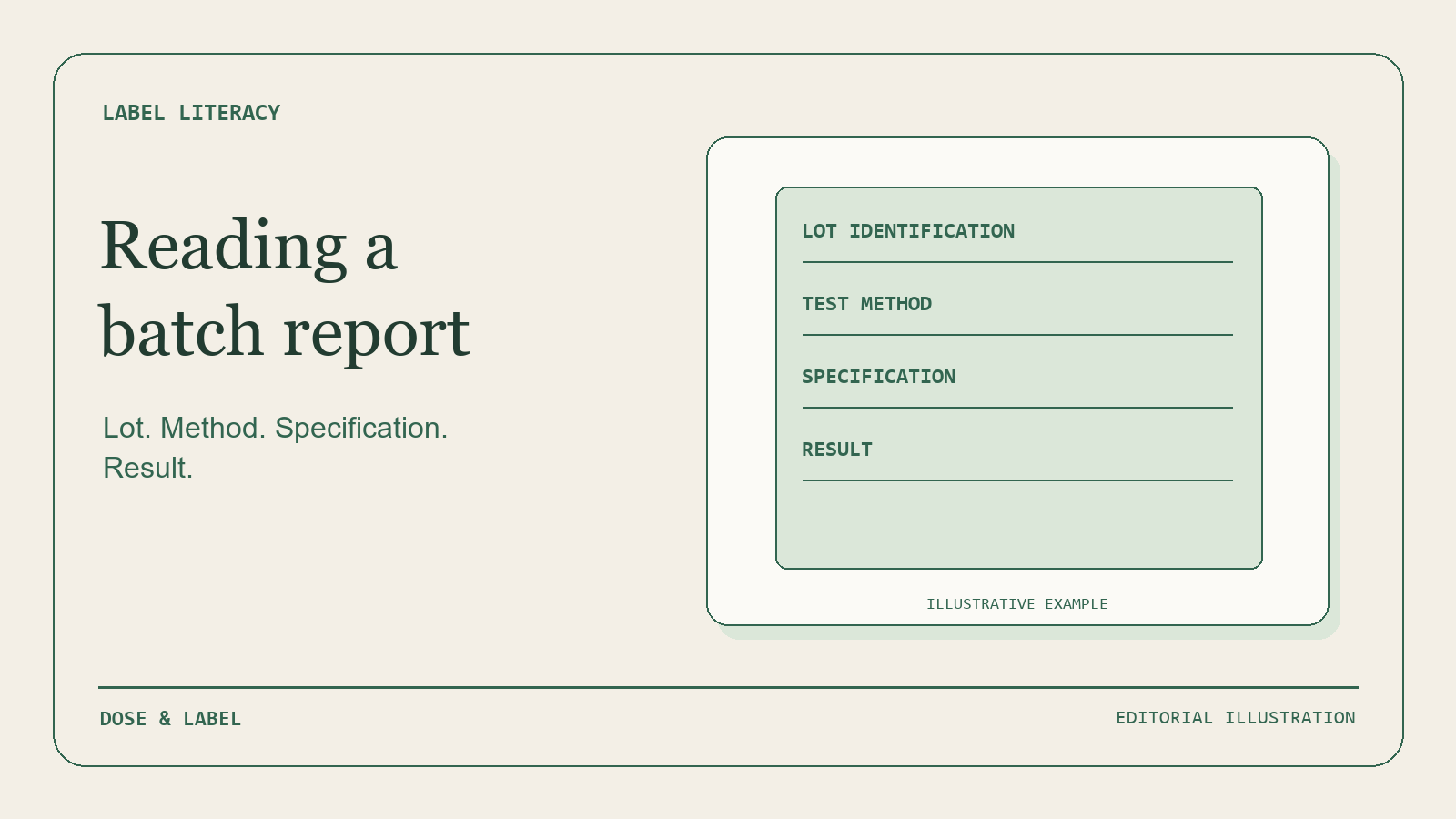
A certificate of analysis can be useful batch evidence, but only when you know what was tested, which lot it covers, and how to read the result.
Browse the archive
Label Literacy
A certificate of analysis can be useful batch evidence, but only when you know what was tested, which lot it covers, and how to read the result.
News & Context
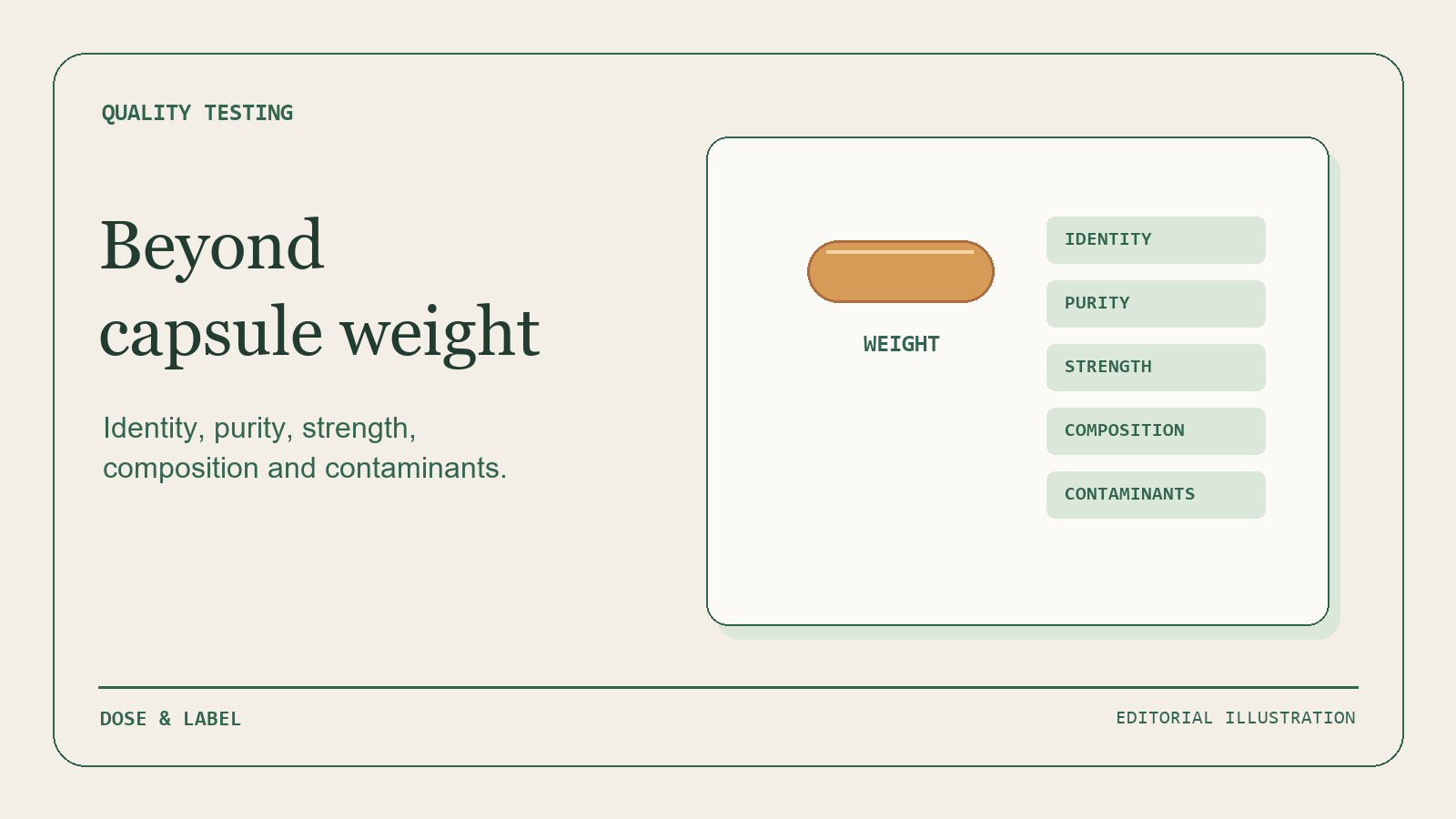
An FDA warning letter offers a clear distinction: a capsule’s listed weight is not, by itself, evidence of identity, purity, strength, composition, or contamination control.
COA
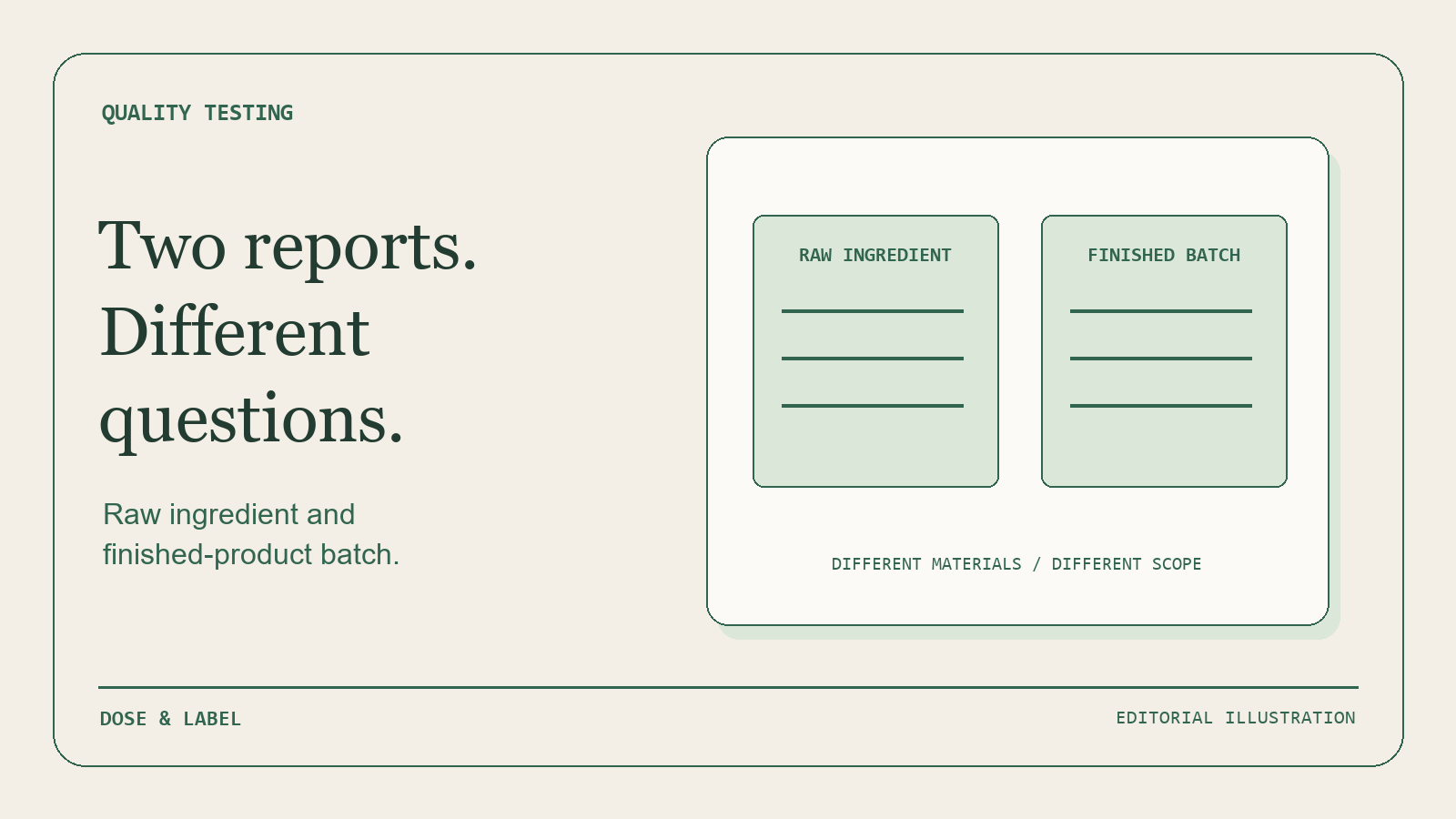
A supplier’s certificate of analysis can be useful evidence about an incoming ingredient. It does not, by itself, demonstrate that a finished dietary-supplement batch matches its final specifications after manufacturing and packaging.
Product File
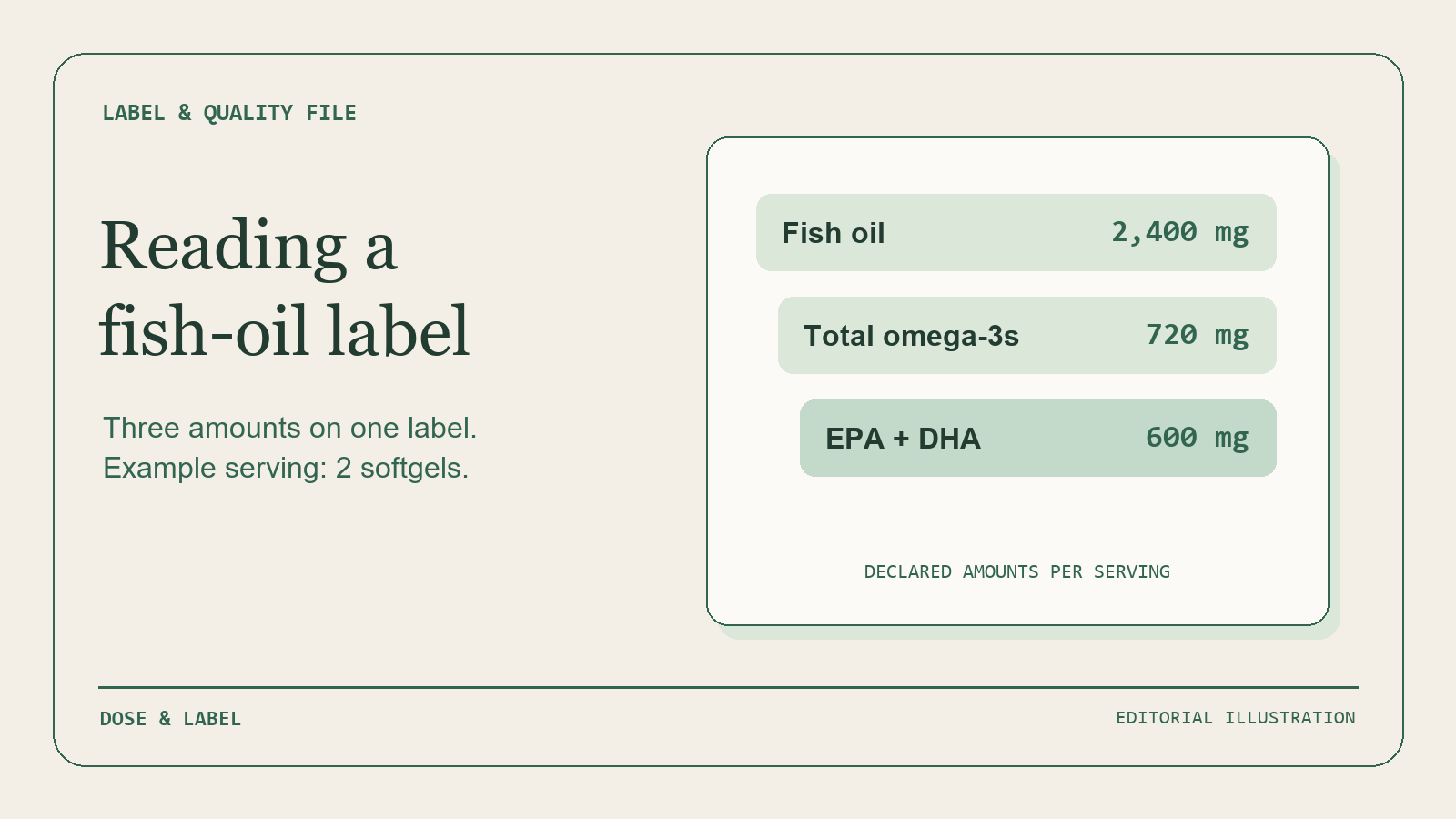
A public product page for an omega-3 fish-oil softgel illustrates why the front-of-pack fish-oil number, total omega-3 amount, EPA+DHA amount, serving size, and a verification mark are separate pieces of information.

News & Context
An FDA-posted October 2026 recall of a male supplement illustrates the difference between a label’s declared ingredients and a product’s verified contents.
News & Context
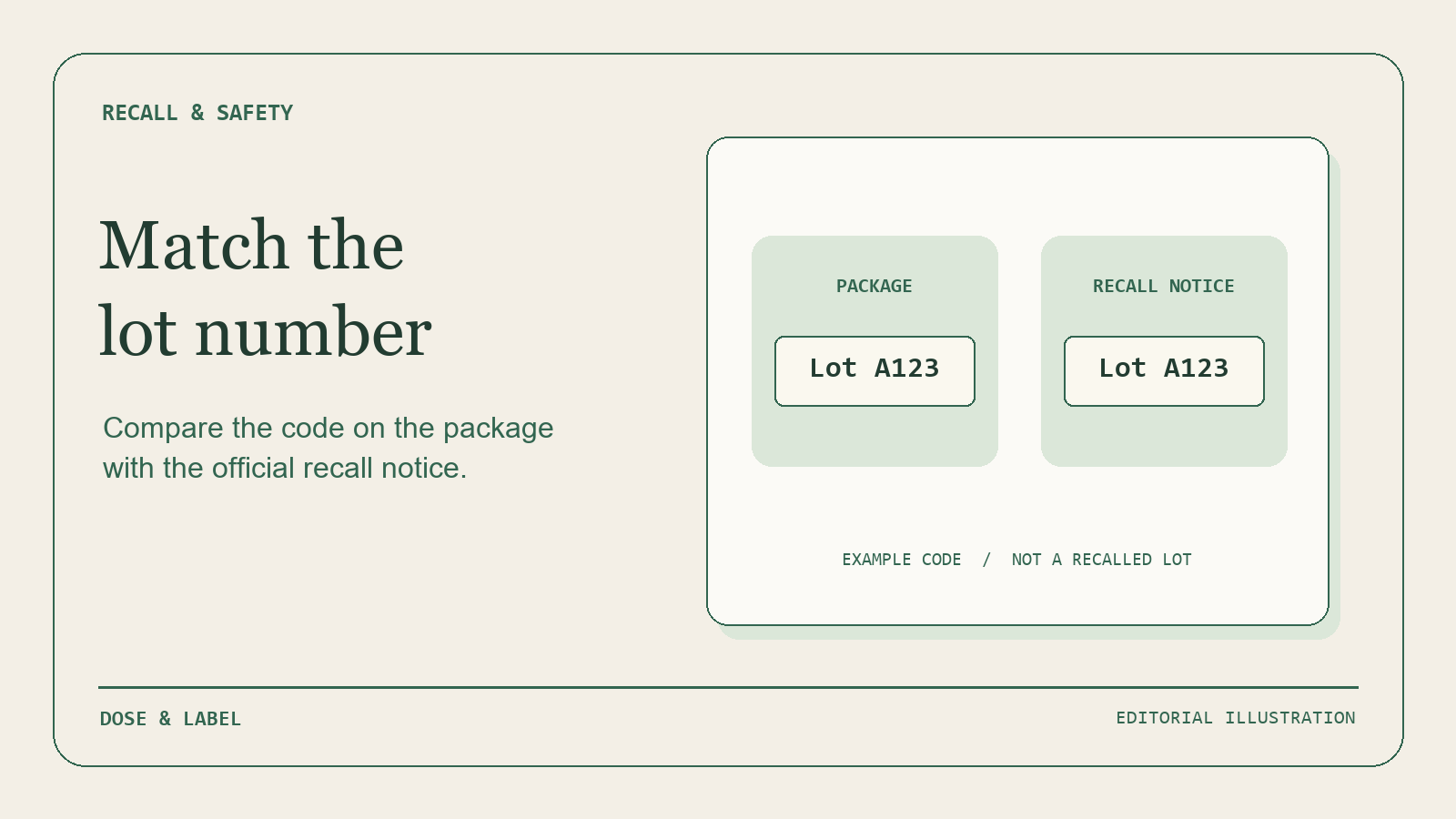
An FDA-posted October 2026 recall involved one lot of 365 Whole Foods Market Ashwagandha Capsules. The announcement is a useful example of why a product's lot, date, and distribution record matter when a safety notice appears.

News & Context
FDA’s October 2026 guidance explains what identity and safety information belongs in a New Dietary Ingredient notification. Here is the practical context for reading supplement quality claims.

News & Context
An FDA-posted recall of a pre-workout product linked to DMAA is a reminder that a label is not, by itself, proof of finished-product verification.

News & Context
A recent FDA-posted recall of a pre-workout product offers a practical reminder of what a label can—and cannot—tell a shopper about a supplement.

Label Literacy
A GMP certificate and a product-specific test report can both be useful, but they do not establish the same thing.